Enterprise-Level Healthcare
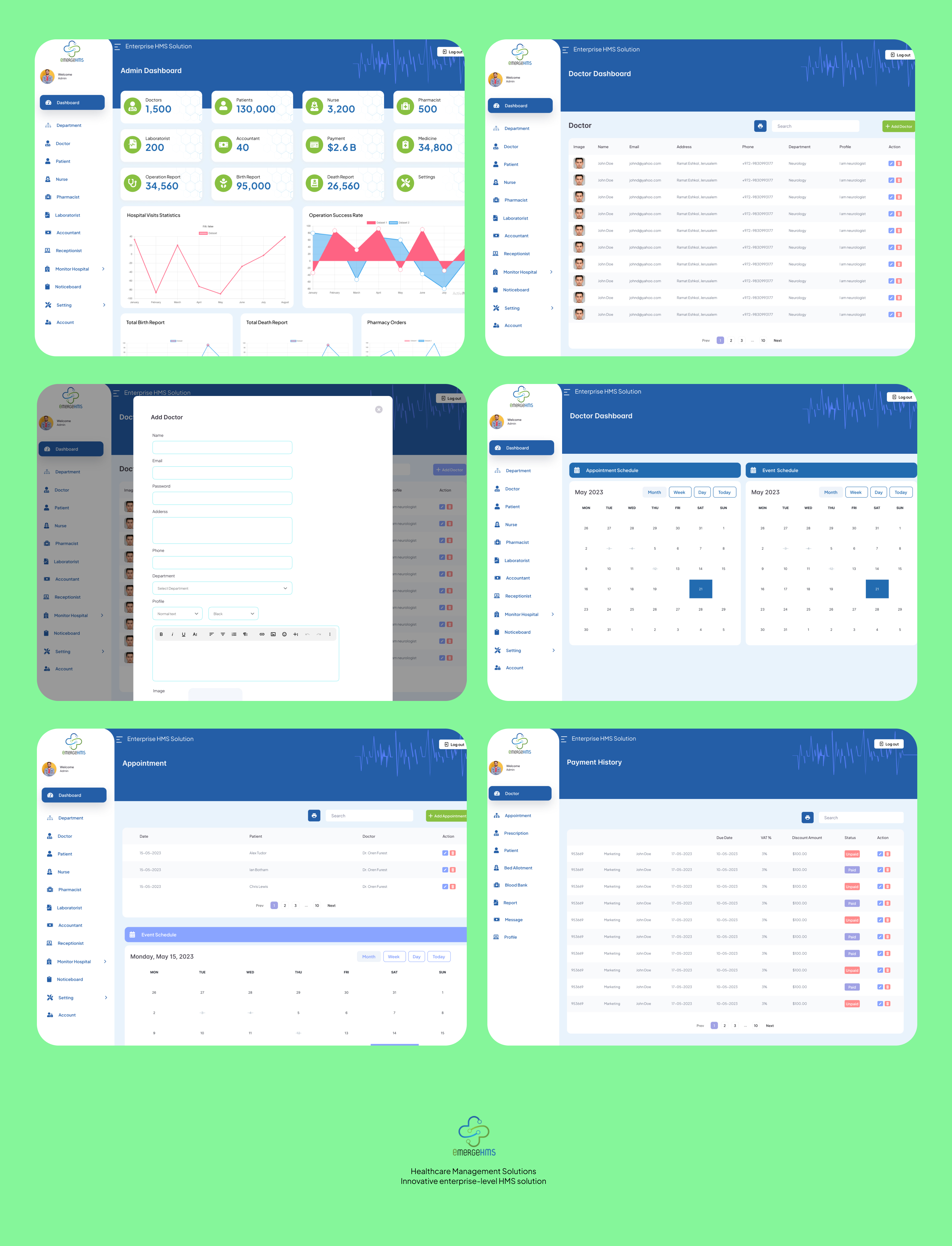
Enterprise-Level Healthcare
Overview:
The Republic of Innovatia, a rapidly developing nation with a growing population of 25 million, faces significant challenges in managing its healthcare infrastructure. Disparate systems, paper-based records, and a lack of interoperability between hospitals and clinics hinder efficient healthcare delivery. EmergeHMS is proposed as the solution: a comprehensive, enterprise-level healthcare management system designed for country-wide implementation. This case study outlines the need for EmergeHMS, its proposed implementation, and the design thinking process behind it.
Target Audiences:
- Ministry of Health (Innovatia): Responsible for national healthcare policy and resource allocation.
- Public and Private Hospitals/Clinics: Healthcare providers ranging from large urban hospitals to small rural clinics.
- Healthcare Professionals (Doctors, Nurses, Administrators): End-users who will interact with the system daily.
- Patients: The ultimate beneficiaries of improved healthcare delivery.
- Insurance Providers: Involved in claims processing and payment.
- Pharmaceutical Companies & Medical Suppliers: Managing inventory and supply chains.
Problem Statement:
Innovatia's current healthcare system suffers from several critical issues:
- Lack of Centralized Data: Patient records are often paper-based and stored locally, leading to duplication, loss of information, and difficulty in tracking patient history across different facilities.
- Inefficient Communication: Communication between hospitals, clinics, and other healthcare stakeholders is slow and unreliable, hindering timely referrals and consultations.
- Limited Data Analysis: The lack of a centralized database makes it difficult to analyze healthcare trends, identify public health concerns, and inform policy decisions.
- Inconsistent Standards: Variations in data collection and reporting across different institutions make it challenging to compare performance and ensure quality of care.
- Inventory Management Challenges: Inefficient inventory management leads to stockouts of essential medications and supplies in some facilities while others experience overstocking and wastage.
- Susceptibility to Fraud: Lack of robust tracking and auditing mechanisms increases vulnerability to fraud and abuse.
Possible Solution:
EmergeHMS offers a comprehensive solution to these problems by providing:
- Centralized Electronic Health Records (EHR): A secure, centralized database accessible to authorized users across the country, enabling seamless sharing of patient information and improving care coordination.
- Streamlined Hospital Management: Modules for patient registration, appointment scheduling, billing, inventory management, and reporting, improving operational efficiency.
- Improved Communication: Secure messaging and communication tools for healthcare professionals, facilitating timely consultations and referrals.
- Data Analytics and Reporting: Powerful analytics tools to track key performance indicators, identify trends, and inform public health interventions.
- Standardized Data Collection: Enforcing consistent data entry standards across all facilities, ensuring data quality and enabling meaningful comparisons.
- Supply Chain Management: Modules for managing procurement, inventory, and distribution of medications and medical supplies, optimizing resource allocation.
- Enhanced Security and Auditing: Robust security measures to protect patient data and audit trails to prevent fraud and abuse.
Design Thinking Process:
The implementation of EmergeHMS in Innovatia would follow a design thinking approach:
- Empathize: Conducting thorough research to understand the needs and pain points of all stakeholders, including healthcare professionals, patients, and administrators. This would involve surveys, interviews, and on-site observations.
- Define: Clearly defining the problem statement based on the insights gathered during the empathize phase. This includes specifying the key challenges and their impact on the healthcare system.
- Ideate: Brainstorming potential solutions and features for EmergeHMS, focusing on addressing the defined problems. This would involve workshops with stakeholders to gather diverse perspectives.
- Prototype: Developing prototypes of key system components and testing them with representative users to gather feedback and refine the design. This iterative process allows for early identification and resolution of usability issues.
- Test: Conducting comprehensive testing of the complete EmergeHMS system in a pilot environment before full-scale deployment. This includes testing for functionality, performance, security, and usability.
- Implement: Rolling out EmergeHMS across the country in a phased approach, providing training and support to users at each stage. This ensures a smooth transition and minimizes disruption to healthcare services.
- Evaluate: Continuously monitoring the performance of EmergeHMS after implementation, gathering feedback from users, and making necessary adjustments to optimize its effectiveness. This ongoing evaluation ensures that the system continues to meet the evolving needs of Innovatia's healthcare system.